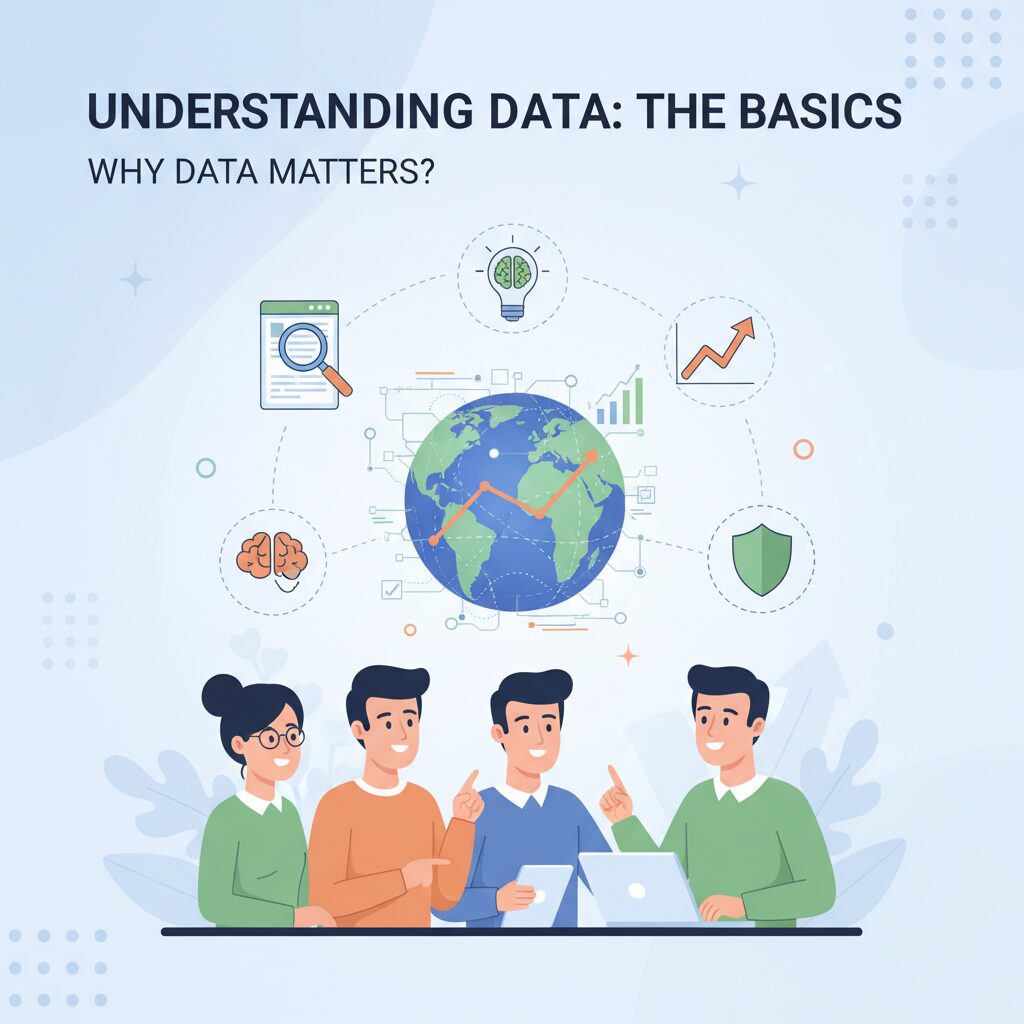
A simple, practical guide for adults learning how data shows up in everyday life.
⭐ What You’ll Learn
This short guide gives you a clear, beginner‑friendly understanding of data and how it shows up in real life. You’ll learn:
- what “data” actually means in simple terms
- the two basic types of data adults use every day
- real‑world examples you’ll recognize instantly
- how data helps you make clearer decisions at home and at work
- small steps to build confidence with data, even if you’re new to it
A calm, practical starting point — no jargon, no pressure.
What Is Data?
Data is information — facts, numbers, details, or observations we collect to understand something. It can be as simple as the steps on your fitness tracker or as complex as the numbers a business uses to make decisions.
Data helps us see patterns, solve problems, and make better choices.
Why Data Matters in Everyday Life
You use data more often than you think:
- checking your bank balance
- comparing prices while shopping
- tracking your sleep or health
- reading reviews before buying something
- noticing trends at work
Data gives you clarity. It helps you understand what’s happening and what to do next.
Types of Data (Simple and Clear)
1. Numbers (Quantitative Data)
Things you can count or measure. Examples: steps walked, money spent, hours worked.
2. Words and Descriptions (Qualitative Data)
Things you observe or describe. Examples: customer feedback, personal notes, comments in a meeting.
Both types matter — numbers show the “what,” descriptions show the “why.”
Real‑World Examples for Adults
- A manager uses data to see which tasks take the most time.
- A parent uses data to track monthly expenses.
- A job seeker uses data to compare salaries.
- A small business uses data to understand customer behavior.
Data isn’t just for tech experts — it’s for anyone who wants to make smarter decisions.
How Data Helps You at Work
- improves communication
- supports problem‑solving
- helps you explain ideas clearly
- makes your decisions more confident
- shows progress over time
Even basic data skills can make your work easier and more effective.
Simple Ways to Build Data Confidence
- start noticing patterns
- write down small observations
- compare before/after results
- ask “what is this information telling me?”
- practice with everyday examples
Small steps build comfort — and comfort builds confidence.
Final Thought
Understanding data isn’t about being technical. It’s about seeing information clearly so you can make better choices in real life.
Data helps you understand your world — one simple step at a time.
