Post 2 – The Components of Information Systems
Introduction
Ever wonder what makes an information system tick? In Post 1: Introduction to Information Systems, we compared information systems to a kitchen, where ingredients and tools come together to create something amazing. Now, let’s break down the recipe! Every information system relies on five core components: hardware, software, data, processes, and people. These building blocks work in harmony to streamline operations, boost efficiency, and drive business success. Whether you’re a small business owner, a student, or just curious about tech, understanding these components will help you see how organizations stay competitive in a digital world. In this post, we’ll explore each component with real-world examples, a visual infographic, and simple explanations—no tech degree required! By the end, you’ll know how these pieces fit together and why they’re essential for any business. Ready to dive into the heart of information systems? Let’s get started!
Section 1: The Five Core Components
An information system is like a puzzle, with each piece playing a critical role. Here are the five components that make it whole:
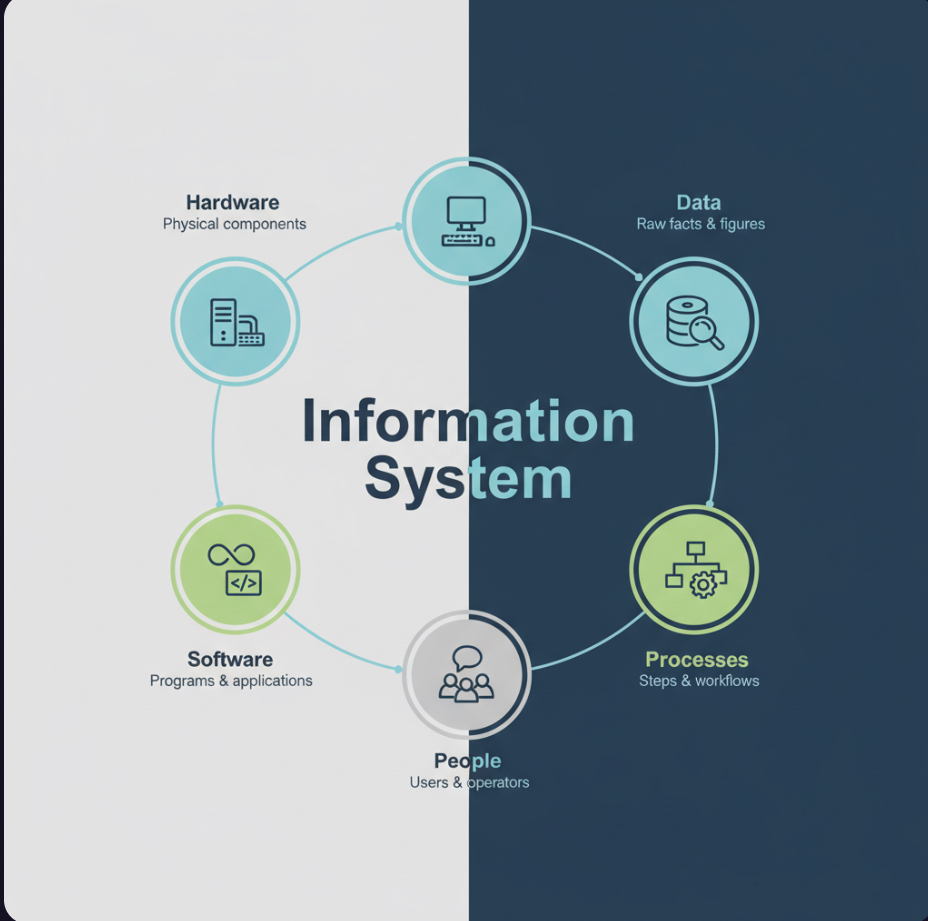
- Hardware: The physical tools you can touch—think computers, servers, or even your smartphone. Hardware is the foundation, running the software and storing data. For example, a retailer’s point-of-sale system (like a cash register) is hardware that processes transactions. Without it, the system can’t function.
- Software: The programs and applications that tell hardware what to do. This includes operating systems (like Windows) and apps (like inventory management software). For instance, a bakery uses software to track orders, ensuring they don’t run out of croissants during a morning rush.
- Data: The raw information—like customer names, sales numbers, or inventory levels. Data is the fuel that powers decisions. A marketing team analyzing website traffic data to target ads is using this component to drive strategy.
- Processes: The rules and workflows that guide how work gets done. Think of processes as the recipe—steps like “enter customer order” or “generate sales report.” A delivery company’s process for routing packages ensures timely drop-offs.
- People: The users, from employees to managers, who interact with the system. People input data, use software, and make decisions. A customer service rep using a CRM (Customer Relationship Management) system to resolve complaints is a key player.
These components don’t work in isolation—they’re interconnected. Hardware runs software, software processes data, processes guide people, and people manage it all. Together, they create a system that’s greater than the sum of its parts.
Infographic
Below is a visual breakdown of the five components, designed to make it easy to grasp how they fit together. Each component has a unique icon and label, ensuring clarity for beginners.
Section 2: Why These Components Matter
Why should you care about these components? Because they’re the backbone of any business relying on technology—which is almost every business today! A small coffee shop uses hardware (a tablet for orders), software (a payment app), data (customer preferences), processes (order fulfillment steps), and people (baristas) to keep customers happy. If one component fails—like a crashed tablet or a poorly trained employee—the whole system suffers. For larger businesses, like an e-commerce giant, these components scale up: massive servers (hardware), custom software, big data analytics, automated processes, and teams of specialists keep orders flowing. Understanding these components helps you identify weak spots, optimize operations, or even choose the right tech for your business. In our next post, we’ll explore how these components come to life in real-world examples.
Conclusion and CTA
The five components of information systems—hardware, software, data, processes, and people—are the building blocks of modern business. Whether you’re running a startup or studying tech, knowing how these pieces work together empowers you to leverage technology effectively. Check out the infographic above to visualize the system, and stay tuned for Post 3: Information Systems in Action, where we’ll see these components at work in industries like retail and healthcare. Want to learn more? Subscribe to our newsletter for updates on this series, or share your thoughts in the comments—what’s one way your business uses information systems? Let’s keep the conversation going!
Word Count: ~750 words
SEO Notes for Yoast:
External Links: IBM’s guide on information systems for authority.
